
Paul was a Roman citizen. This is a very important part of Paul’s life as we can see citizenship played an interesting role in his ministry and in his ability to travel freely from place to place. Without this citizenship, Paul’s trips would have been even more hindered than they were.
Roman Citizenship
Paul seemed to place significance on this citizenship and used it more than once to free him from difficult circumstances or to preach the gospel. It was largely due to his citizenship that he was able to preach the gospel over such great distances. It was because of his citizenship that he was able to preach to leaders and plant the gospel seed within the leadership of the Roman empire.
Paul and the Old Testament
In addition, Paul’s training as a Pharisee became very important in his ministry to the Jews and Gentiles alike. God used Paul’s education and familiarity with the law to lay a foundation and explain the gospel to all people. The book of Romans, in its first place among the epistles, is steeped with Old Testament references, along with the rest of his letters. It was impressive to see the extent that Paul was able to reference the OT scriptures. While Paul originally used the OT to condemn Christians, God eventually opened his eyes and showed him how Jesus was the long-awaited Messiah of his people, both Jew and Gentile.
The Jesus Church
The church today is more of a Jesus church, rather than a Pauline church. The church is the body of Christ, where Christ is the head, therefore, it cannot be a Pauline church. If it were, we may no longer be called Christians, but Paulinians.
The church must have Jesus at its center.
Paul addressed the topic of believers identifying with a particular teacher instead of Christ alone, “Now I say this, that each of you says, ‘I am of Paul,’ or ‘I am of Apollos,’ or ‘I am of Cephas,’ or ‘I am of Christ.’ Is Christ divided? Was Paul crucified for you? Or were you baptized in the name of Paul?” (1 Corinthians 1:12-13).
While the teachings of Paul shaped much of how today’s church operates, it was done by the inspiration of the Holy Spirit and, therefore, Christ’s Spirit. For the Spirit always magnifies the Son, so it cannot be true that today’s church is a Pauline church.
The Apostle Paul would have been horrified at the thought of a “Pauline” church. Paul would point us right back to Christ as he did many times over in his writings.
In Philippians Chapter Three, after Paul mentions the reasons he could have confidence in his own flesh, then states that he “counts them as rubbish, that I may gain Christ and be found in Him… (Philippians 3:8-9).” Paul mentioned that he and believers were “in Christ” or “in Him” numerous times, which showed that he thought of himself as a new creature in Christ, the old Paul had passed away.
Relevance of Paul
Paul’s teachings are still relevant in a post-modern world, just as surely as the entire contents of the Bible are still relevant, even though the world grinds contrary to much of what he and it claimed.
One could argue that Paul’s teaching on marriage is antiquated, or that it only pertained to the culture surrounding the early churches. However, his teachings are based on principles God had set and his people have followed for over a thousand years.
God’s standards do not change.
While we are no longer bound by the law and are not saved by law, we are still expected to keep the basic principles of righteousness that God has set in place. We need to continue to work toward sanctification “For this is the will of God, your sanctification…” (1 Thessalonians 4:3).
We cannot do this on our own, but with the help of the Spirit we can become more and more like Christ until that day, when in the twinkling of an eye, we will be completely and eternally changed.
Throughout Paul’s ministry, he never disregarded his Jewish foundation but used the same OT scriptures that he learned as a Pharisee to show that Jesus was the fulfillment of the Hebrew scriptures.
Paul’s missionary journeys were an immense undertaking accomplished through the empowerment of the Holy Spirit, to further the gospel message far and wide. He went from a closed society of Jewish belief, with a standard of superiority, to being able to connect and communicate with Gentiles from many regions and, furthermore, do this with a humble and servant type attitude.
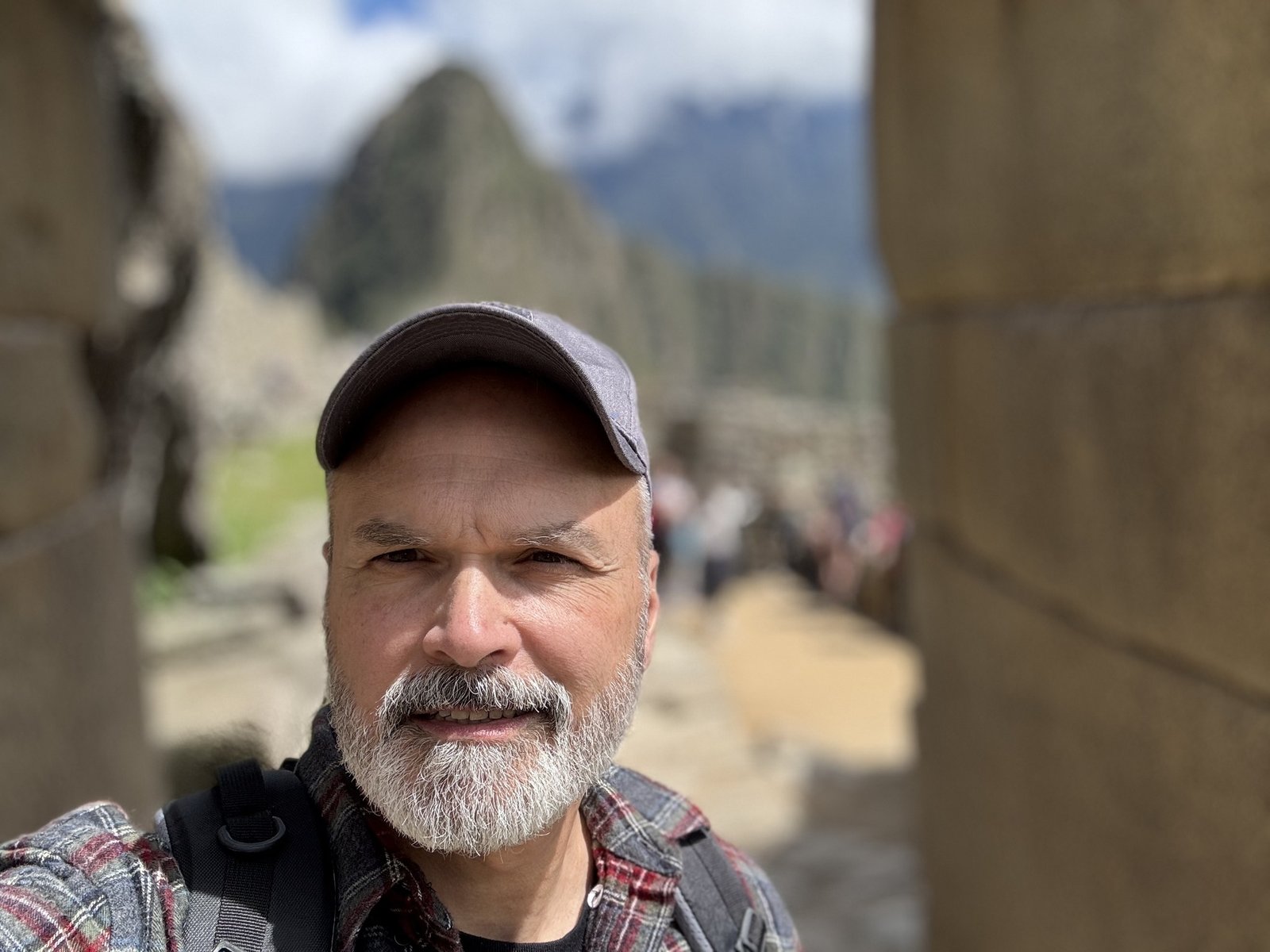
Dan Buteau has been married for the last 33 years and is a father of four adult children. He is also a grandfather to five children. He serves as a Pastor at a church in southern Maine. He has a Bachelor’s Degree in Math Studies from Granite State University and a Master’s of Theology degree from Liberty University. In addition, Dan served in the United States Marine Corps for four years and retired from a 25-year career in law enforcement. He has a hunger and thirst for the Word of God and is continuing to obey the calling of his Savior, Jesus Christ, as he carries out the Great Commission.